

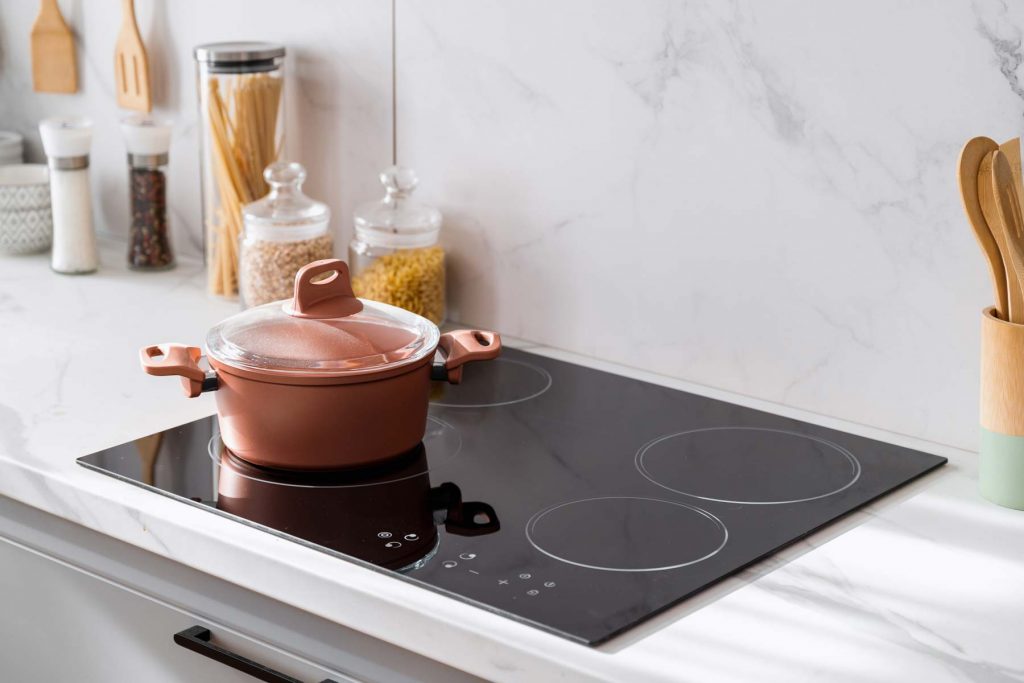
A step-by-step guide for keeping your cooktop shiny, safe, and spotless
Glass cooktops look great when they’re clean. They give a kitchen a sleek, modern feel, and when they shine, the whole room seems a little more put together. But anyone who owns one knows how quickly that smooth black surface can go from spotless to streaked, greasy, and covered in burned-on messes.
One boil-over, one splash of sauce, or a little grease from a frying pan is all it takes. The good news is that cleaning a glass cooktop is not difficult. The key is using the right method. If you clean it too aggressively or use the wrong tools, you can leave scratches, streaks, or dull spots behind.
The goal is simple: remove debris, loosen stuck-on messes, clean the surface gently, and finish with a smooth, streak-free shine.
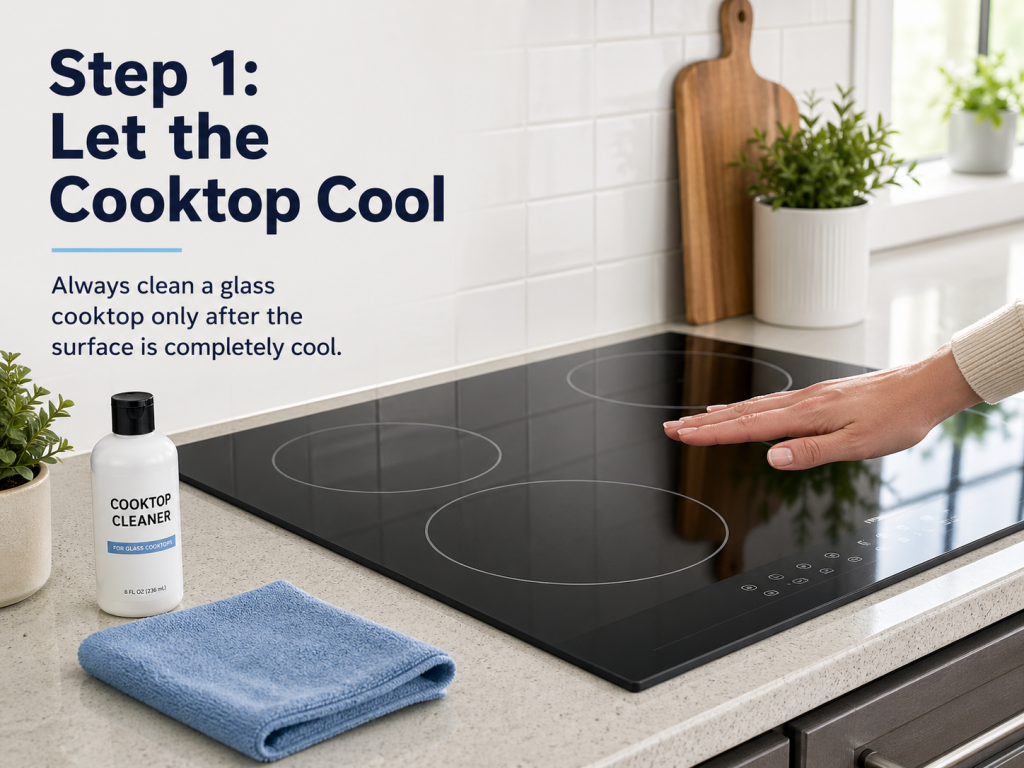
Step 1: Let the Cooktop Cool
The very first rule of cleaning a glass cooktop is simple: make sure it is completely cool before you begin.
A lot of people are tempted to wipe spills immediately after cooking, but glass cooktops should be cleaned carefully and safely. A hot surface can cause cleaners to dry too fast, create streaks, or even make residue harder to remove. More importantly, it increases the chance of burns.
Before you start cleaning, turn the cooktop off and wait until the surface is fully cool to the touch.
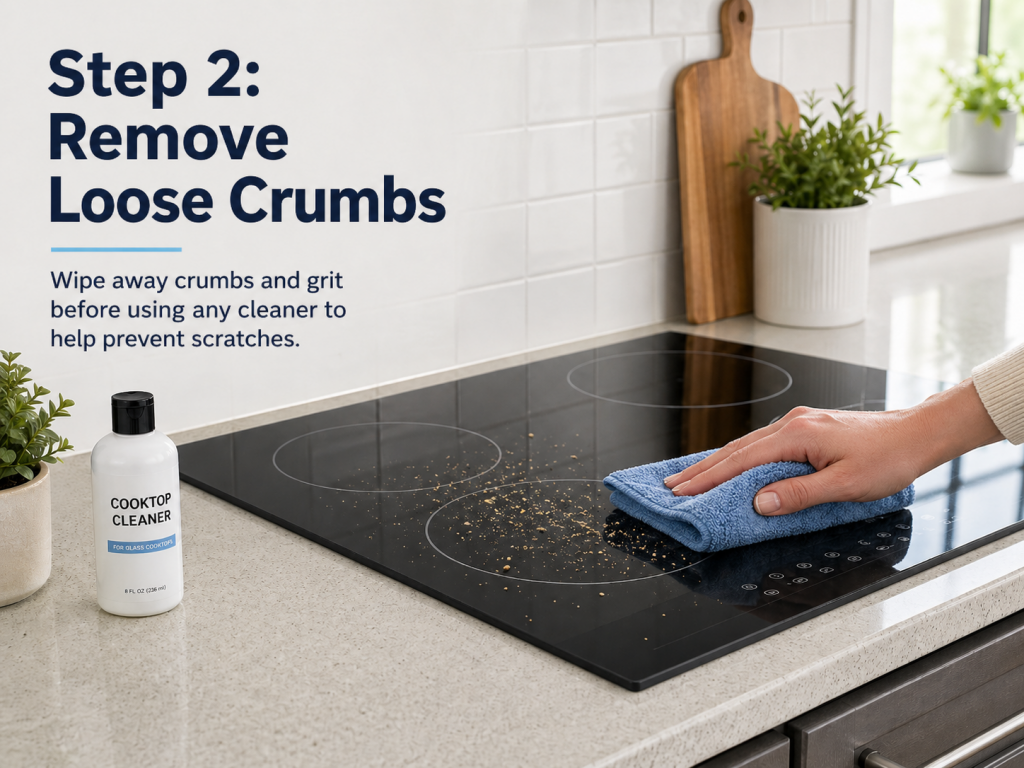
Step 2: Remove Loose Crumbs and Debris
Once the surface is cool, begin by removing any loose crumbs, grit, or dry debris.
This step is more important than many people realize. Tiny food particles can scratch the glass if you start wiping them around with a cloth. Think of it like rubbing sand across a shiny surface — even small bits of grit can cause damage over time.
Use a dry microfiber cloth or soft paper towel to gently wipe away crumbs before applying any cleaner.
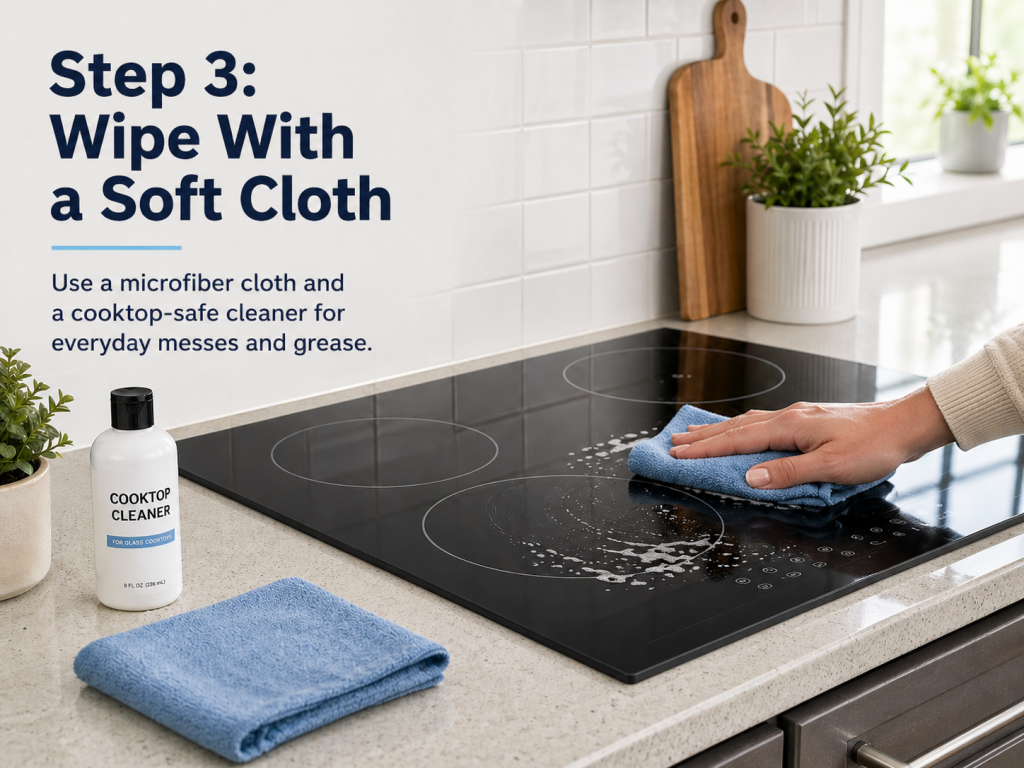
Step 3: Wipe With a Soft Cloth and Cooktop-Safe Cleaner
For regular messes like fingerprints, grease, and light food splatter, a microfiber cloth and a cooktop-safe cleaner are usually all you need.
Apply a small amount of glass cooktop cleaner or use a cloth dampened with warm water and a little dish soap. Wipe gently across the surface, focusing on the messy areas. Avoid rough scrubbing pads or anything abrasive. Glass cooktops respond best to patience, not pressure.
After wiping, use a clean damp cloth to remove any remaining cleaner residue.
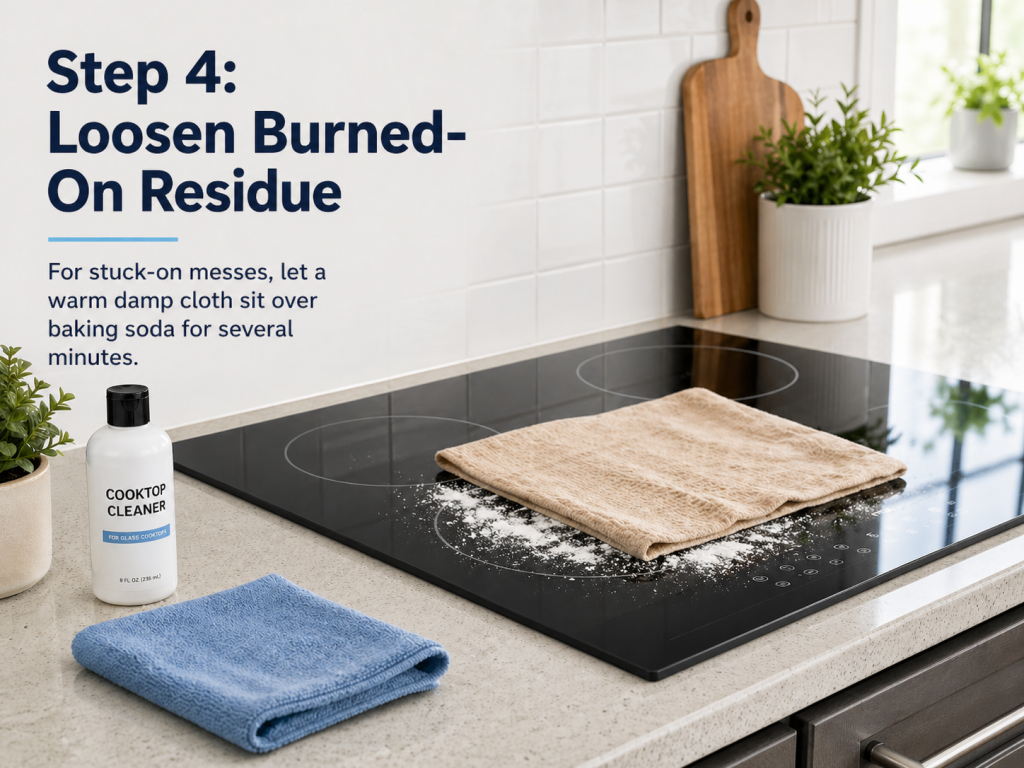
Step 4: Loosen Burned-On Residue
When food is stuck on or burned into the surface, do not reach for anything harsh right away. The best approach is to soften the mess first.
Sprinkle a little baking soda over the problem area, then place a warm, damp cloth over it. Let it sit for several minutes. This gives the baking soda and moisture time to loosen the residue so it can be removed more easily.
This step helps you avoid aggressive scrubbing and reduces the risk of damaging the cooktop.
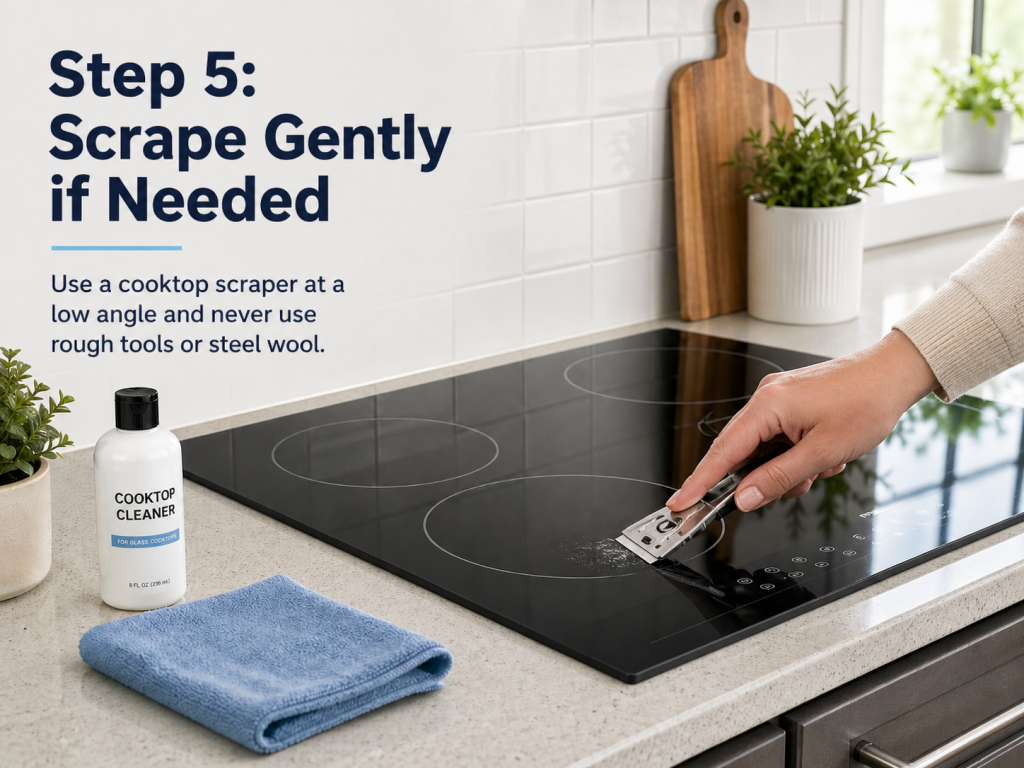
Step 5: Scrape Gently if Needed
If residue is still stuck after softening it, you can use a cooktop scraper made specifically for glass surfaces.
Hold the scraper at a low angle and gently push it across the residue. This is one of the safest ways to remove stubborn buildup without scratching the cooktop — as long as you use the tool correctly.
Never use a knife, metal spatula, steel wool, or rough scrubber. Those can easily damage the glass and leave permanent marks behind.
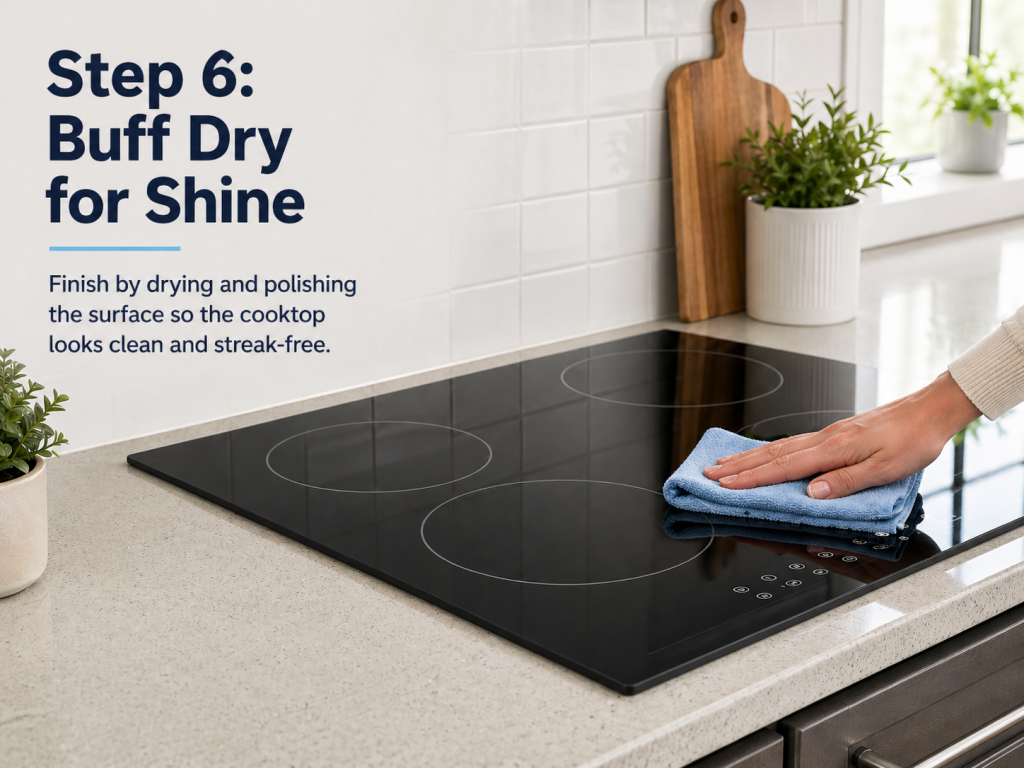
Step 6: Buff Dry for a Streak-Free Shine
Once the cooktop is clean, the final step is drying and polishing the surface.
Take a clean, dry microfiber cloth and buff the cooktop until it looks smooth and streak-free. This final step helps remove any leftover moisture or haze and brings back that glossy finish that makes a glass cooktop look its best.
If needed, a small amount of cooktop polish or a light mist of vinegar can help give it an extra shine, but even a dry microfiber cloth can make a big difference.
What to Avoid When Cleaning a Glass Cooktop
A glass cooktop may seem sturdy, but it can be damaged if it’s cleaned the wrong way. Avoid steel wool, rough scouring pads, abrasive powders, oven cleaner, bleach-heavy products, or anything designed for harsher surfaces. These can scratch the glass or dull its finish.
You should also avoid sliding pots and pans across the surface. Even if the glass looks tough, grit on the bottom of cookware can create scratches surprisingly fast.
And one more important reminder: sugary spills like syrup, jelly, or melted candy should be cleaned up as soon as safely possible, because they can damage the surface if left behind.
The Bottom Line
Cleaning a glass cooktop properly comes down to using the right method in the right order. Let the surface cool, remove loose debris, wipe it gently, soften stuck-on residue, scrape only if necessary, and finish by buffing it dry.
It’s not about cleaning harder. It’s about cleaning smarter.
A little routine maintenance can keep your cooktop looking great, prevent buildup, and make your kitchen feel cleaner overall. And when that glass surface is polished and spotless again, it really does make the whole kitchen feel refreshed.
Comments
Comments are closed for this article.